
Originally Posted On: https://travelandtourtips.com/how-to-pack-for-alaska-bear-watching-trips-when-no-food-is-allowed-on-the-trail/
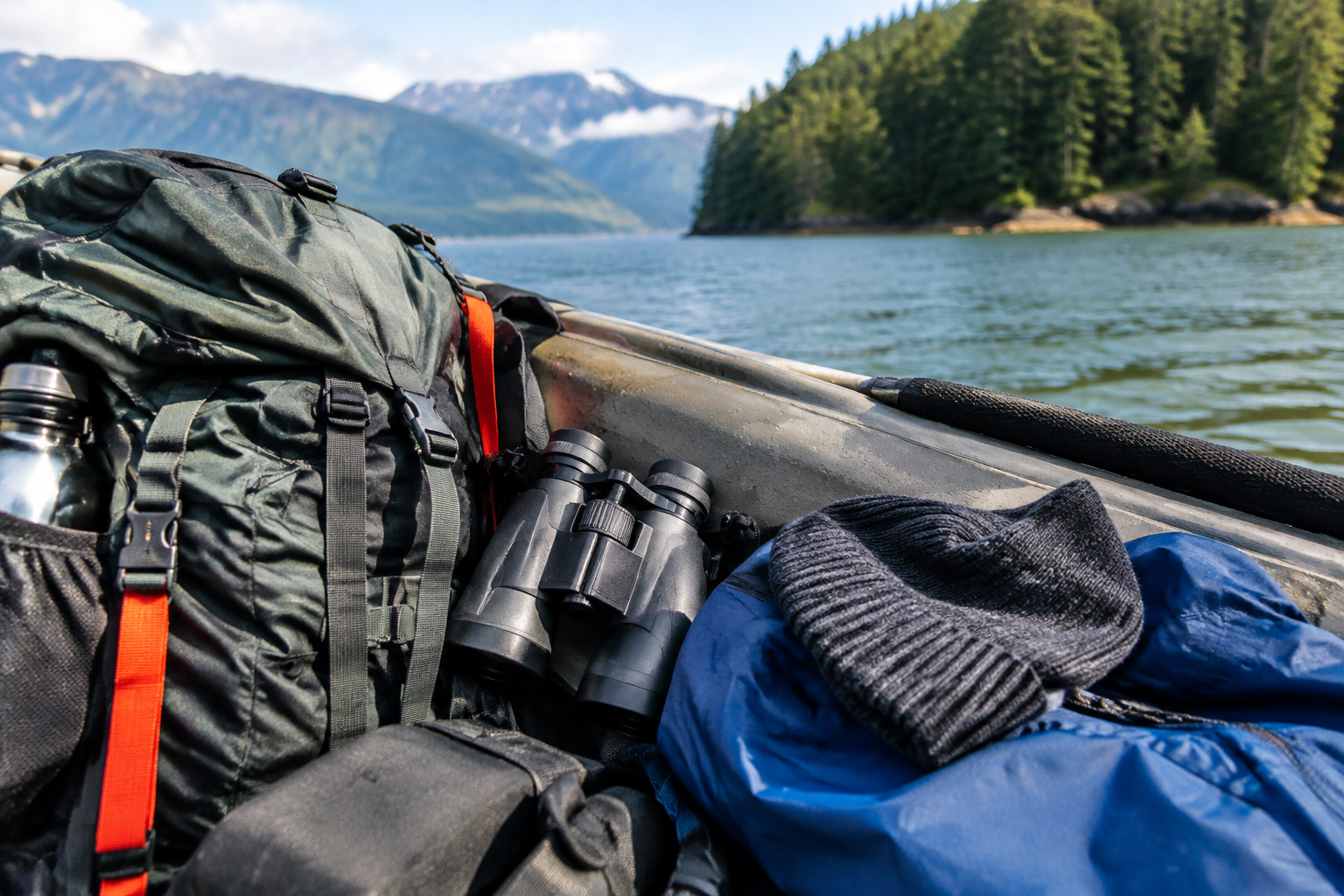
What You’ll Need
Gather this before you start packing. Most of it is already in your closet.
-
Time required: About 45 minutes to pack the night before, plus 10 minutes for a final check the morning of your trip.
-
Rain gear: A waterproof shell jacket and rain pants. Cotton hoodies won’t cut it on wet boardwalks.
-
Layers: A moisture-wicking base layer and a fleece or light insulated mid layer.
-
Footwear: Waterproof boots or sturdy shoes with good tread, plus wool or synthetic socks and one dry spare pair.
-
Camera setup: Your camera or phone, a zoom lens if you own one, spare batteries, extra memory cards, and a zip-top bag or rain cover.
-
Small daypack: Empty of food. Keep it light enough that you forget it’s on your back.
-
Cooler or bag for the boat: A lunch and snacks stash that stays aboard while you walk the trail.
-
Walking sticks (optional): Handy if your knees complain on stairs or uneven ground.
-
Your ship’s all-aboard time: Write it down and know how far the meeting spot is from the dock.
-
Skills and mindset: Be ready to listen to your guide, stay with the group, and keep your voice low. No outdoor experience is required.
-
Prerequisite: A confirmed spot on the bear trip and a quick read of the operator’s trail rules, including the no-food policy and the age guidance.
Bears don’t care about your granola bar. They care a lot, actually, which is exactly why you can’t bring it. On most Alaska bear watching trips that end at a managed observatory, food stays off the trail, and that single rule changes how you pack for the whole day.
Think about what that means for a cruise passenger. You’ve got a few hours ashore, a ship that won’t wait — a half-mile walk to a viewing deck where brown and black bears feed on salmon a short distance away. No trail mix in the pocket. No peppermint for the walk back. Nothing in the daypack that smells like dinner.
Most people get this wrong the first time. They pack like it’s a regular hike, then discover at the dock that their jacket pockets are full of contraband gum and the lunch they planned to eat at the creek has to stay behind. It’s an easy fix. But it’s much easier to sort out at the hotel or on the ship than on a wet gravel path with a guide watching.
Packing right also protects your viewing time. Roughly three hours at the observatory is a generous window, and you don’t want to spend it cold, hungry, or fumbling with the wrong lens. Rain is routine here. So are slick boards and long stretches of waiting for a bear to step out of the brush.
The good news? A smart pack for this kind of day is lighter than you’d expect. Here’s how to build one, step by step, so you can focus on the bears instead of your bag.
What You’ll Get Done and What You Need Before You Start
A woman steps off a ship at 8 a.m., zips a granola bar into her jacket pocket, and heads for the boat. Ten minutes later, a guide tells her the bar has to stay behind. That’s a rough way to learn the rules. The fix takes about twenty minutes of planning.
The goal: a pack that works for a no-food bear observatory
The target is simple. Build a light pack that carries everything you need for the boat ride — the walk, with zero food or scented items headed to the viewing deck. Guided Alaska bear watching trips to a Forest Service observatory run on strict rules because grizzly and black bears feed on salmon just yards from the platform. Food, wrappers, and even strong smells can change how a bear behaves. So you eat before and after. Never on the trail.
Done right, your pack stays small, your hands stay free for the camera, and you’re back at the ship well ahead of all-aboard.
Materials checklist before you start
Gather these before you leave your cabin. A guided Alaska bear watching tour supplies water and snacks for the boat, but the rest is on you.
-
Rain jacket and warm layer for changeable weather in the rainforest
-
Waterproof shoes with grip for gravel and wood bridges
-
Camera or phone with a spare battery
-
Walking stick, if your knees want one
-
A real meal eaten before and after, kept off the trail
-
Small daypack with nothing scented inside
Step 1: Learn the No-Food Rule Before You Pack Anything
Food is banned on the trail and at the observatory. No exceptions, no loopholes. Guests booking Bear watching Alaska at Anan Creek hear this rule first, and for good reason.
Why bears and food never mix near a salmon stream
A black or brown bear at a salmon stream is already working. It’s fishing, fat-building, and paying attention to every smell in the air. Add a granola bar wrapper to that mix, and you’ve taught the animal that people carry meals.
That lesson sticks. A bear that links humans with food gets bolder, and bold bears usually end up destroyed. So the rule protects the animals as much as you.
Here’s what most people miss: bears smell far better than any of us can guess. A sealed pack won’t fool them.
What counts as food (gum, mints, energy chews, and drink flavorings)
If it has a scent or you can swallow it, it counts. Leave all of these in your daypack or back on the boat:
-
Gum and mints (yes, even one)
-
Energy chews, gels, and trail bars
-
Drink flavorings and electrolyte tablets
-
Lip balm and candy-scented items that smell sweet
Eat a solid meal before and after the observatory visit. Plain water is the safe bet on the walk.
Does that feel strict? It should. Following your guide’s direction here keeps everyone safe.
Step 2: Eat Right Before and After the Trail, Not During
Where does a hungry traveler put a sandwich when the observatory bans every crumb? The answer is simple: in your stomach before the trail, or in a cooler after it. Food isn’t permitted on the path or at the viewing deck, because the smell can pull bears toward people. Guides enforce that rule hard, and for good reason.
Build a hearty meal plan around the boat ride
Plan for a long stretch without snacks. On a typical Anan day, the boat ride runs about an hour each way, and roughly three hours go to the observatory. That’s a lot of hours on an empty tank.
-
Before boarding: Eat a real breakfast with protein, such as eggs, oatmeal with nuts, or yogurt.
-
On the boat: Sip water and nibble the provided snacks while still aboard.
-
Before stepping onto the trail: Finish any last bites and toss wrappers. Pockets should be empty.
Anyone booking Alaska bear viewing experiences like this one should treat the boat deck as the last stop for food.
Pack a lunch cooler that stays on the boat
Lunch isn’t included, so bring your own. Keep it simple and sealed.
-
Choose a small soft cooler with a zip top.
-
Pack easy items: wraps, cheese, fruit, trail mix.
-
Leave it aboard, never in a daypack.
-
Eat once you’re back on the water.
Cruise passengers especially should pack lunch ahead, since the ship’s all-aboard clock leaves little room for a restaurant stop. Done right, the cooler is waiting when you return, and the bears never notice it.
Step 3: Check the Weather and Tides, Then Dress in Layers
Rain falls on roughly 200 days a year across Southeast Alaska’s coast, so a dry forecast is the exception. Check the marine forecast the night before. Then look again at breakfast, because tides and wind can shift the whole day. A tide table matters on Alaska bear watching trips since the boat ride, creek level, and bear activity all follow the water. Dress for the boat first, then the trail.
Base layer, mid layer, and rain shell
Start with a wool or synthetic base. Cotton stays wet — chills you. Fleece goes on top. It’s warm, quiet, and it won’t spook anything.
The shell comes last. Pick a real rain jacket with a hood, not a poncho that flaps in the wind. Guests on the Anan Bears Tour spend about three hours standing still at the observatory, so warmth matters more than you’d guess. Standing is colder than hiking.
-
Base: long-sleeve wool or synthetic
-
Mid: fleece or light puffy
-
Shell: waterproof jacket with hood
Boots, socks, and rain pants for wet gravel and wood bridges
Wet boards are slick. Wear waterproof boots with real tread, and skip fashion sneakers. Wool socks keep feet warm even when damp, and a spare pair in your bag is cheap insurance.
Rain pants earn their place too. Wet brush along the half-mile path soaks jeans fast, and wet legs make for a miserable ride back. Pull them on over your trousers before leaving the dock. Walking sticks help on the stairs, and remember: no food rides on the trail, so leave snacks aboard.
Step 4: Pack Your Camera Gear for Close-Range Bear Viewing
Bigger isn’t better. Most people assume a giant telephoto is the only way to photograph bears, and that’s wrong. On a managed deck, the bears often walk close enough that a huge lens just gets in your way.
Lens choice for bears at the observatory deck
A 70-300mm zoom handles nearly everything on the deck. Add a wide lens or a phone for the moment a grizzly steps into the frame at 30 feet. Skip the tripod, since rails and crowds make it useless (and nobody wants a leg poking a neighbor). Bring a small beanbag instead, or just brace your elbows.
Guests who tour anan bears get roughly three hours on site, so plan for patience. Shoot fast shutter speeds, at least 1/1000 sec, because salmon-chasing bears move quickly.
Keeping batteries and cards dry and warm
Rainforest weather wrecks gear. Cold drains batteries fast. Here’s what works:
-
Two spare batteries kept in an inside jacket pocket, close to your body.
-
Extra memory cards in a small zip bag, so a full card never ends your day.
-
A rain cover or even a plastic bag with a hole cut for the lens.
-
A microfiber cloth for mist on the boat ride.
Remember, no food is allowed at the observatory, so leave snacks and wrappers out of your camera bag. Pack the bag light. It’s a short walk, but you’ll carry everything yourself.
Step 5: Plan for the Short Walk and Your Own Stamina
A couple in their late sixties steps off the boat, looks at the trail sign, and wonders if their knees will hold. They will. Most guests on Bear tours Alaska offers at this observatory handle the walk fine, but it pays to know what’s coming before you pack.
What a half-mile of compacted gravel and bridges really feels like
Think paved sidewalk, just damp. The route is a short staircase, then about a half-mile of packed gravel and wooden bridges through old-growth forest. No scrambling. No steep climbs.
Here’s what catches people, though: you’ll stand and shuffle a lot once you reach the observatory, and you’ll spend roughly three hours there. Wet boards get slick. Carry nothing in your hands, because food isn’t allowed on the trail, so a small pack with only camera gear and a rain layer keeps your balance steady.
-
Footwear: grippy, waterproof shoes beat fashion sneakers.
-
Pace: groups of up to 12 walk at a time, so nobody’s racing.
-
Layers: you’ll warm up walking, then cool off watching bears.
Walking sticks, mobility needs, and asking your captain ahead of time
Bring walking sticks if you use them at home. They’re worth the space. If a hip, knee, or balance issue worries you, say so when you book. The crew can adjust slightly when mobility limits the walk, and the boat isn’t ADA certified, so a quick call settles surprises early.
Step 6: Leave the Smell Traps and Extras on the Boat
Bears smell everything. Your lip balm included.
On a managed trail, food stays behind, and the rule covers anything with a scent a black or grizzly bear might read as a meal. The crew on a good Alaska bear guided tour will remind you of this before anyone steps off, because one forgotten granola bar in a pocket puts the whole group at risk.
Scented lotions, lip balm, and snack wrappers
Skip the perfumed stuff that morning. Fruity lip balm, coconut sunscreen, and hand cream all carry smells that travel far in damp rainforest air (and a bear’s nose is far better than yours).
-
Lotions and sunscreen: apply unscented products on the boat, then wash up.
-
Lip balm: leave flavored tubes aboard.
-
Wrappers: an empty gum or cough drop wrapper still smells like candy. Toss it before you leave.
Bags, pockets, and what to stash before you step off
Do a pocket sweep. Coat, pants, camera bag, every zipper. Mints hide in jacket linings more often than you’d think.
Here’s a simple routine before you leave the dock area:
-
Empty every pocket and check the corners.
-
Pack only camera, rain layer, and water if allowed.
-
Leave snacks, toiletries, and spare bags in the boat’s storage.
-
Ask the guide if you’re unsure about an item.
Travel light. You’ll walk easier, and the bears won’t notice you at all.
Step 7: Time Your Day Around the Ship’s All-Aboard Window
How much slack does your day really have? On a port day, the all-aboard time doesn’t move, and Alaska bear tours and viewing take 5 to 6 hours door to door, with roughly three of those spent at the observatory. Count backward from the ship’s deadline before you book anything.
Meeting point, dock distance, and arriving early
The check-in office sits about 300 feet from the cruise dock.
Look for the company flags. That’s a short walk, not a trek, so there’s no reason to be late.
-
Arrive 15 to 20 minutes early to sort out your gear and use the restroom.
-
Eat before you board. Food isn’t allowed on the trail, so finish your snack at the office or on the boat.
-
Check your pockets. Granola bars left in a jacket can’t go to the observatory.
Building a buffer so you’re never racing back
Here’s the honest math. Take the all-aboard time and subtract at least 60 minutes. That’s your latest return to the dock. Then pick a departure that fits inside it.
Weather and tides can shift a boat ride by a half hour. Cruise-day trips are planned around port times — a cushion keeps one slow stretch from becoming a problem. Tell your guide your ship’s departure time at check-in. They’ll keep an eye on the clock so you can keep your eyes on the bears.
Step 8: Follow Your Guide’s Bear Safety Rules on the Trail
Only 12 people are allowed on the Anan trail at a time. That one number says a lot about how tightly managed Alaska bear watching trips run in grizzly and black bear country. The rules aren’t suggestions. On the Anan Bears Expedition, guides carry bear spray and rifles, and they expect guests to do exactly what they’re told.
Staying together, staying quiet, and moving when told
Keep it simple. Stay close, stay calm, and listen.
-
Walk as one group. Don’t drift ahead or lag behind for a photo.
-
Keep voices low. Quiet talk is fine. Shouting and sudden noise aren’t.
-
Move when the guide says move. If a bear wanders near the trail, you may be asked to step back or hold still, so do it without debate.
-
Leave the snacks in your pack. Food stays off the trail and the observatory, period.
Bears read body language fast. A calm group is a boring group to a bear, and boring is exactly what you want.
Age guidance and why very young kids are a poor fit
Infants and toddlers are strongly discouraged. The recommended minimum age is 5. Why? Crying, shrieking, and even baby smells can change how a bear behaves, and nobody can predict it. A small child also can’t be counted on to freeze or stay put when a guide gives an order.
Older kids who can follow directions usually do fine. Think honestly about your own group before you book.
Common Packing Mistakes and How to Fix Them
Most people think a ranger will never check a pocket, so a stray granola bar doesn’t matter. Wrong. Bears smell what you can’t, and the rule exists for one reason: a bear that links people with food becomes a problem bear. On the Anan Wildlife Tour, guides brief every guest on this before the trail, and they mean it.
Hidden food in jacket pockets and daypacks
Gum wrappers. Half-eaten trail mix. A lone cough drop. All of it counts. Before you step off the boat, turn every pocket inside out. Then do the same to the daypack’s side pouches, which is where forgotten snacks usually live.
-
Eat your meal on the boat or before you arrive.
-
Leave the empty snack bag aboard too, since wrappers hold scent.
-
Rinse out any water bottle that held juice or coffee.
Overpacking heavy gear you’ll never use
The walk is short, about half a mile on gravel and wood bridges, so you don’t need a loaded pack. A big lens bag and three layers of spare clothes just wear you out (and slow the group). Bring a camera, one extra layer, and a small pack. That’s it.
Skipping rain gear because the morning looked clear
Southeast Alaska weather flips fast. Clear at the dock can mean drizzle by the time bears show up at the creek. Pack a light, packable rain shell — wear it if the sky turns. Cotton hoodies soak through and stay cold, so skip them. Wet guests get miserable. Miserable guests miss the bears.
Final Check: How to Confirm Your Pack Is Ready for Bear Day
A couple from the ship stands at the dock at 7 a.m. One camera bag, one rain shell, and a granola bar still zipped in a jacket pocket. The guide spots it before they reach the boat. That bar stays behind, and the morning starts with a scramble. It’s a small mistake, and it’s a common one.
Run a check the night before. Then run it again at the door.
The Two-Minute Pack Inspection
-
Empty every pocket. Check jackets, daypack lids, camera cases, and purses for gum, mints, and wrappers. Bears smell what you’ve forgotten.
-
Eat before the trail. Food isn’t allowed at the observatory, so finish your meal and snacks on the boat or back at the dock.
-
Layer up. Pack a waterproof shell, a warm hat, and gloves. Weather in the Tongass National Forest changes fast.
-
Check your camera. Charge the battery, clear the memory card, and bring a zoom lens for black and grizzly bears.
-
Wear solid shoes. The half-mile walk is easy, but wet boards get slick.
Water bottles are fine on the boat. Keep sealed drinks out of your trail pack anyway.
For the full rundown on rules — timing, review the details for Anan Bears Viewing before you leave your cabin. Good Alaska bear watching trips come down to prep, and prep takes ten minutes.
Pack light. Pack clean. You’ll thank yourself when a bear walks up to the deck.
How-To FAQ
Can I bring any snacks at all on the trail?
No, you can’t carry food of any kind onto the trail or into the observatory. That includes gum, mints, and candy. Eat before you leave the boat, then leave every wrapper and crumb behind. Bears learn fast, and a single snack can change how an animal acts around people.
What should I do with my lunch while I’m at the observatory?
Leave it on the boat, sealed in a cooler or closed bag. Plan to eat once you’re back aboard for the ride home. Tip: eat a solid meal before the walk so you aren’t hungry for the three hours or so you’ll spend watching bears.
Is a water bottle allowed on the trail?
Plain water is generally the one thing most guests carry, but check with your captain before you step off. Skip flavored drink mixes, electrolyte tablets, and anything sweet. If your guide says water stays on the boat, trust that call and sip up beforehand.
How much gear is too much to carry?
If it weighs more than you’d happily carry for a mile round trip, it’s too much. Here’s a quick test:
-
Bring: camera with one zoom lens, spare battery, rain shell, warm hat, gloves
-
Leave: tripods you won’t use, extra lenses, large daypacks, scented products
-
Check first: walking sticks if you need them
What if the weather turns bad on bear day?
Dress for rain anyway, because Southeast Alaska weather changes fast. Your captain watches the sky and tides and will tell you if the plan shifts. A good rain shell, rain pants, and waterproof boots keep you comfortable when the sky opens up. Wet gravel and wood bridges get slick, so wear shoes with grip.
Will I make it back to the ship on time?
Yes, if you build in a buffer and show up early at the meeting point. Cruise-day trips are planned around the all-aboard window, and the office sits only a short walk from the dock. Aim to arrive well before departure, and don’t schedule anything else that day that could cut it close.
Bear day goes well when the pack is boring. Nothing in the pockets, nothing scented, nothing that crinkles. Guests who eat a big meal before the boat leaves and save the cooler for the ride back spend their time at the observatory watching bears, not thinking about their stomachs.
Layers matter just as much. Wet gravel, wood bridges, and a cool breeze off the water punish anyone who trusted a clear morning. A rain shell, sturdy boots, and a camera kept dry will do more for the day than any extra gadget.
Then there’s the clock. Passengers on a ship schedule can’t afford a scramble, so a buffer built into the plan protects the experience as well as the all-aboard time. Guides set the rules for good reason, and following them is how guests earn long, close looks.
Planning Alaska bear watching trips takes a little discipline — it pays off. Before the day arrives, lay out your gear, empty every pocket, and run through the final checklist one last time. Then contact Muddy Water Adventures with your ship’s port time and book the Anan Creek bear tour while July and August dates are still open.


