SHENGZHOU, ZHEJIANG, CHINA, October 10, 2026 /EINPresswire.com/ —
As manufacturers across the appliance, refrigeration, food processing, and industrial equipment sectors seek dependable thermal components, Shengzhou Beno Electric Appliance Co., Ltd. continues to serve the market with a broad range of electric heating elements. Based in Shengzhou, Zhejiang Province, China, the company specializes in the design and manufacture of heating tubes and other components used for heating, defrosting, and temperature maintenance. Its product portfolio includes Silicone Rubber Heater and Heating Plate solutions, alongside tubular heaters, defrost heating elements, heating belts, heating wires, and customized products. With electric heating technology playing an important role in equipment performance, the company’s product categories reflect the diverse requirements of manufacturers seeking components that fit specific applications, operating conditions, and installation designs.
The Growing Importance of Electric Heating Components
Electric heating elements are essential components in a wide variety of modern products and industrial processes. They convert electrical energy into heat and deliver it to air, liquids, surfaces, or equipment components, depending on their construction and intended use. From household appliances and refrigeration equipment to industrial machinery and food processing systems, heating elements support functions ranging from rapid heating to frost prevention and temperature maintenance.
The performance requirements vary considerably between applications. A heating tube used in an oven must tolerate the expected temperatures and operating cycles, while a defrost heater in a refrigeration system must operate under conditions involving moisture and repeated cooling cycles. Heating components used in industrial machinery may need to fit specific mounting spaces, maintain a controlled temperature, or withstand vibration and environmental exposure.
For equipment manufacturers, selecting the appropriate heating element involves more than choosing a component with the required power rating. Voltage, resistance, dimensions, material compatibility, surface temperature, heat distribution, insulation, and control methods can all affect performance. A mismatch between the heating element and the equipment may result in uneven heating, inefficient operation, premature failure, or unnecessary maintenance.
Shengzhou Beno Electric Appliance Co., Ltd. focuses on electric heating elements designed for different applications, providing buyers with a range of product types to evaluate. Its manufacturing portfolio includes tubular heating elements, defrost heaters, flexible heaters, heating plates, and other components intended for household appliances and industrial equipment. This breadth allows customers to explore different heating technologies according to their technical requirements.
Heating Tubes: A Versatile Solution for Thermal Applications
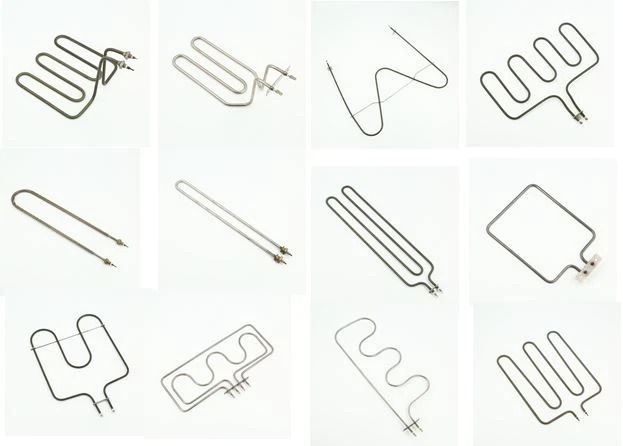
Heating tubes, also known as tubular heating elements, are widely used because they can be manufactured in different shapes, lengths, diameters, and configurations. Their construction commonly involves a resistance-heating wire enclosed within a metal sheath, with electrically insulating material separating the conductor from the sheath. When electrical current passes through the resistance wire, heat is generated and transferred through the sheath to the surrounding environment.
The precise construction depends on the intended application. Tubular heaters may be designed for heating air, liquids, metal surfaces, or equipment assemblies. Their shapes can be adapted to fit the available installation space, while materials and surface treatments must be selected according to temperature, corrosion exposure, and contact conditions.
In household appliances, tubular heating elements are used in equipment such as ovens, toasters, washing machines, electric water heaters, and fryers. Industrial applications can include process heaters, molds, machinery, and specialized heating systems. In refrigeration equipment, specially designed heating tubes may be used to remove accumulated frost from components such as evaporators and drainage areas.
Beno’s product range includes heating tubes and defrost heating elements for refrigeration and appliance applications. For original equipment manufacturers, this type of product can be especially important because the heating element must integrate with the equipment’s electrical system, physical layout, and temperature-control strategy.
When evaluating a heating tube, buyers should confirm the required voltage and power, sheath material, tube dimensions, terminal arrangement, mounting method, and operating environment. They should also establish the expected heating cycle and the method used to control temperature. Where a heater operates in contact with liquids or in a damp environment, insulation integrity and suitable electrical protection are particularly important.
Defrost Heating Elements for Refrigeration Equipment
Defrost heaters play an important role in refrigeration systems by helping remove frost that accumulates on heat-exchange surfaces during operation. In evaporators, frost can restrict airflow and reduce heat transfer, potentially affecting cooling performance. A properly designed defrost system helps restore the intended operating conditions.
Defrost heating elements are used in refrigerators, freezers, air coolers, unit coolers, and cold-storage systems. Their design must account for the available space, temperature conditions, moisture exposure, electrical requirements, and the defrost control sequence. Some applications may require additional protection around terminals or specific arrangements for drainage and water collection.
The heating element must supply sufficient heat to remove frost without creating excessive temperatures that could damage nearby components. The placement of the heater, the duration of the defrost cycle, and the coordination with the refrigeration controls all influence system performance.
Shengzhou Beno Electric Appliance Co., Ltd. identifies defrost heating tubes as one of its key product categories. The company’s broader experience with electric heating elements provides a basis for supplying components for different refrigeration applications. Buyers should still verify the compatibility of a particular heater with the target refrigerator, freezer, evaporator, or cold-storage system.
For refrigeration equipment manufacturers, useful procurement information includes drawings, existing part numbers, electrical specifications, dimensions, terminal details, and photographs of the installation. Providing this information can help suppliers evaluate whether an existing design is appropriate or whether a customized heating element should be considered.
Silicone Rubber Heater: Flexible Heating for Specialized Equipment
Silicone rubber heaters offer a different approach from conventional metal-sheathed tubular heaters. They use a flexible structure that can conform to certain surfaces, making them suitable for applications where a rigid heating element would be difficult to install. Depending on the design, a silicone rubber heater may be manufactured as a heating pad, belt, mat, or other flexible component.
These heaters are used in applications such as compressor crankcases, pipelines, drums, food fermentation equipment, brewing systems, incubators, and industrial heating pads. Their ability to follow a surface can help improve contact between the heater and the component being warmed. This is particularly useful when the objective is to maintain temperature or prevent a fluid or material from becoming too cold.
Shengzhou Beno Electric Appliance Co., Ltd. offers Silicone Rubber Heater products for different heating and temperature-maintenance applications. The product category is relevant to equipment manufacturers and industrial users that need a flexible heating component with defined dimensions and electrical characteristics.
In refrigeration systems, for example, a silicone rubber heater may be used in an appropriate crankcase or drainage application to help manage temperature under specified operating conditions. In process equipment, flexible heaters can support the warming of drums, containers, or pipelines, provided that the selected heater is compatible with the surface and operating environment.
Customization is often important for flexible heating elements. Buyers may need to specify the heater’s length, width, shape, voltage, wattage, lead-wire arrangement, attachment method, and temperature-control requirements. Some designs may include a thermostat or temperature sensor, while others depend on an external control system. These options should be confirmed for the exact model rather than assumed to be standard.
Although flexible heaters are adaptable, they must be installed and operated according to their design limits. Bending radius, surface contact, insulation condition, operating temperature, and the characteristics of the heated material can affect both safety and service life. Users should avoid operating a heater outside its specified conditions and should ensure that appropriate electrical protection is in place.
Heating Plate for Controlled Surface Heating
Heating plates are designed to transfer heat through a defined surface. They are used in equipment where a flat or shaped heating area is needed, including heat press machines, transfer printing equipment, hot-stamping machinery, cookers, boilers, and other industrial or commercial applications.
The design of a heating plate depends on the equipment in which it will be installed. Its dimensions, mounting points, material, power rating, and internal heating arrangement determine how it integrates with the host machine. The plate must distribute heat appropriately across the working surface and withstand the mechanical and thermal conditions associated with repeated use.
Shengzhou Beno Electric Appliance Co., Ltd. includes Heating Plate in its product portfolio, supporting applications where surface heating is required. For example, heat-transfer and hot-stamping equipment relies on controlled heat to support the processing of materials. In these applications, the temperature profile and the consistency of heat distribution can affect the quality of the finished product.
Heating plates may be manufactured using different structural designs and materials. Buyers should therefore confirm whether the proposed product is suitable for the intended pressure, operating temperature, heating cycle, and surface dimensions. The control system also matters: an appropriate thermostat, sensor, or external temperature controller can help regulate operating conditions, depending on the equipment design.
For customized projects, technical drawings and detailed operating information can help establish the required specifications. Buyers should clarify the target temperature, warm-up time, acceptable temperature variation across the surface, electrical supply, and installation method. These details provide a more reliable basis for selecting a heating plate than dimensions alone.
Customization and Manufacturing Considerations
Industrial customers frequently require heating elements that match the design of a particular machine or appliance. Standard products can meet many common needs, but customized components may be necessary when installation space, electrical characteristics, or operating conditions differ from conventional specifications.
Customization may involve changing the dimensions, shape, wattage, voltage, terminal arrangement, sheath material, insulation, or attachment method. For Silicone Rubber Heater products, it may also involve the flexible structure and the arrangement of leads or sensors. For a Heating Plate, the working area, mounting details, and temperature requirements may be central to the design.
Beno’s official website describes its capabilities in heating-element design, manufacturing, testing, inspection, and packaging. The company also promotes customized heating products for different industries. Buyers considering a custom solution should provide as much technical information as possible, including drawings, existing samples, operating conditions, and the purpose of the heater.
The development process should include confirmation of the electrical and mechanical requirements, review of the proposed design, and assessment of relevant testing needs. Where necessary, a prototype or sample can help determine whether the heating element fits correctly and performs as expected before larger-scale production begins.
Manufacturing quality also depends on consistency between the approved design and the finished product. Relevant checks may include dimensions, electrical resistance, insulation performance, terminal integrity, appearance, and functional testing. The specific inspection process should reflect the design and intended use of the heater.
Energy Efficiency, Safety, and Service Life
The efficiency of an electric heating system depends on the heater, the equipment design, insulation, control strategy, and the way the system is operated. A well-matched heating element can deliver heat where it is needed, while appropriate insulation and temperature regulation can help limit unnecessary energy use.
For manufacturers, the choice of heating element should consider both initial cost and long-term operating requirements. A component that is inexpensive but poorly matched to the application may require frequent replacement or contribute to inconsistent product performance. Buyers should evaluate expected duty cycles, operating temperatures, maintenance access, and replacement-part availability.
Electrical safety is especially important because heating elements operate by converting electricity into heat, often under elevated temperatures or in environments where moisture may be present. Appropriate grounding, insulation, over-temperature protection, and control components should be incorporated according to the equipment design and relevant regulations. Installation and maintenance should be performed by qualified personnel following the manufacturer’s instructions.
Regular inspection can help identify damaged insulation, loose connections, corrosion, or other signs of wear. The maintenance schedule should be based on the operating conditions and the recommendations for the specific heater. Users should not rely on a generic service interval when the actual environment or duty cycle is more demanding.
For equipment manufacturers purchasing heating elements from Beno, clarifying testing requirements, quality documentation, warranty conditions, and technical support arrangements can help establish expectations before production begins.
Serving International Equipment Manufacturers
Heating components are used in products distributed across many international markets. For suppliers, this means responding to different electrical systems, equipment standards, environmental conditions, and procurement requirements. Export-oriented buyers may need product documentation, drawings, packaging specifications, and confirmation that the chosen component is suitable for the destination market.
Shengzhou Beno Electric Appliance Co., Ltd. reports that its heating elements are exported to more than 50 countries and that its products are used in sectors including refrigeration, household appliances, industrial equipment, food processing, and other applications. The company also identifies OEM and customized production among its service offerings.
For international customers, effective cooperation begins with clear technical communication. Buyers should confirm production lead times, minimum order quantities, sample arrangements, labeling, packaging, and the availability of replacement products. Where specific certifications are required, the relevant documents should be checked for the exact model and intended market.
A supplier’s ability to understand the application and communicate clearly can be as important as its product range. By specifying the operating environment and performance requirements in detail, purchasers can make more informed decisions about the heating elements they source.
As industrial and household equipment continues to evolve, electric heating components remain essential to thermal control, defrosting, and process performance. Tubular heaters, flexible silicone rubber heaters, and heating plates each serve different roles, and their effectiveness depends on correct design, material selection, testing, and integration into the host equipment.
About Shengzhou Beno Electric Appliance Co., Ltd.
Shengzhou Beno Electric Appliance Co., Ltd. is an electric heating element manufacturer based in Shengzhou, Zhejiang Province, China. The company’s official website describes its specialization in the design and manufacture of heating elements for defrosting, heat preservation, household appliances, refrigeration equipment, and industrial applications. Its product portfolio includes heating tubes, defrost heating elements, Silicone Rubber Heater products, Heating Plate solutions, heating belts, heating pads, heating wires, heating cables, aluminum foil heaters, and other customized components. The company states that it offers design, manufacturing, testing, inspection, packaging, and customer support services, with products supplied to international markets. Customers seeking technical specifications, customized heating solutions, or product inquiries can visit the company’s official website at www.benoindustry.com.
Address: No.8.Jiangsi Road, Sanjiang Industry Zone, Shengzhou, Zhejiang, China
Official Website: https://www.benoindustry.com/
Eric
Shengzhou Beno Electric Appliance Co., Ltd.
sale@benoelectric.com
Legal Disclaimer:
EIN Presswire provides this news content “as is” without warranty of any kind. We do not accept any responsibility or liability
for the accuracy, content, images, videos, licenses, completeness, legality, or reliability of the information contained in this
article. If you have any complaints or copyright issues related to this article, kindly contact the author above.

Media gallery