
Key Takeaways
- Hydraulic dovetail trailers lower the deck to ground level, removing the need for manual ramps and cutting the risk of loading accidents
- Diamond C, MAXX-D, and Load Trail each take a different approach, from a 12.5-degree loading angle to GVWR capacities reaching 40,000 pounds
- Automatic load balancing and stronger hydraulic brakes give these trailers shorter stopping distances when hauling heavy equipment
- Proper weight distribution and tie-downs still matter even with a hydraulic dovetail, a point covered later in the article
- Poplar Bluff Trailer compares hydraulic dovetail models across multiple brands – find their full insights below
Loading heavy equipment onto a trailer has always carried a little risk. A track loader inches up a steep ramp, the operator holds their breath, and everyone on site hopes the machine doesn’t shift or scrape bottom.
Until now. Hydraulic dovetail trailers change that picture by lowering the entire rear section to ground level, letting equipment roll on and off without ramps or guesswork.
Ground-Level Loading Changes Everything
For contractors who load skid steers, excavators, or dozers several times a week, the difference between a manual ramp and a hydraulic dovetail is a shift in how loading gets done, not a small convenience. Push a button, watch the deck lower flush with the ground, and drive the machine straight on without fighting an incline.
This kind of ground-level access matters most for equipment with tight clearance or a long wheelbase, since those machines are the most likely to scrape or hang up on a traditional ramp. Contractors hauling across job sites with uneven terrain benefit from a trailer that adapts to the ground rather than forcing the ground to adapt to the trailer. Hydraulic dovetail trailers have become a go-to option for operators who want loading to be fast and predictable instead of a daily gamble.
The technology behind these trailers relies on controlled fluid power, the same basic principle used in heavy machinery hydraulics, to lift, tilt, and lower the deck smoothly even under heavy load. That controlled motion is why hydraulic dovetails have moved from a nice-to-have feature to a standard expectation among equipment haulers.
Why Hauling Heavy Equipment Demands Hydraulics
Heavy equipment is not forgiving regarding loading angles or ramp stability. A few degrees of difference in approach angle, or a ramp that is not quite secure, can turn a routine load into a costly mistake.
Lower Loading Angles for Low-Clearance Machines
Tracked machines and equipment with a long wheelbase are especially prone to scraping on steep ramps. A lower loading angle solves this by letting the machine’s undercarriage clear the transition point without dragging or bottoming out. This is one clear reason contractors moving mini excavators, skid steers, or compact track loaders lean toward hydraulic dovetails instead of fixed ramps.
Fewer Ramps, Less Risk
Manual ramps require setup, alignment, and careful positioning before anything gets loaded. Every one of those steps is a chance for something to go wrong, whether it is a ramp that is not locked in place or a machine that drifts off center. Hydraulic dovetails remove most of those steps entirely, since the deck itself becomes the ramp and lowers into position automatically.
The Safety Case Behind the Technology
Safety is the strongest argument for hydraulic dovetails, and it goes beyond avoiding a dropped ramp. The technology changes how loads behave once they are on the trailer and how much physical strain falls on the operator.
Automatic Load Balancing and Shorter Stopping Distances
Fluid pressure within hydraulic systems automatically balances heavy loads to prevent shifting once the trailer is moving down the road. That balancing effect, paired with the stopping force hydraulic brakes provide, gives drivers shorter stopping distances when hauling heavy machinery. For contractors moving equipment between job sites, that margin can matter during sudden stops or unexpected traffic.
Remote-Controlled Precision Cuts Operator Fatigue
A wireless remote lets the operator step back and watch the deck, the equipment, and the ground all at once while positioning the dovetail. That visibility reduces the chance of misjudging clearance or alignment, and it means less physical strain since nobody is manually cranking a ramp or wrestling with pins and chains. Over the course of a long week of loading and unloading, that reduced fatigue adds up, and safer, less-tired operators are generally less likely to end up part of a Workers’ Compensation claim or miss a day of work.
Efficiency Gains That Pay Off On-Site
Beyond safety, hydraulic dovetails earn their keep by speeding up the rhythm of a job site. Every minute saved loading or unloading is a minute spent on productive work instead.
Faster Turnarounds at the Job Site
Automated ground-level loading trims the setup time that manual ramps demand, and that speed compounds across a full day of hauling. Contractors moving material or equipment between multiple sites in a single shift notice the difference most, since faster turnarounds let crews fit in additional loads without running into overtime.
Fuel Savings from Reduced Drag and Tire Scrub
Self-adjusting hydraulic profiles can reduce wind drag and tire scrub while the trailer is in motion, which translates into lower diesel fuel consumption over time. For fleets hauling heavy loads across long stretches of highway, even modest fuel savings on each trip can add up across a season of regular hauling.
Comparing Leading Hydraulic Dovetail Builders
Not every hydraulic dovetail trailer is built the same way, and the differences between manufacturers show up in loading angle, capacity, and overall construction quality.
Diamond C’s 12.5-Degree Loading Angle
Diamond C’s 12-foot hydraulic dovetail is built around a loading angle of roughly 12.5 degrees designed for easy loading, and it is rated to lift and carry up to 10,000 pounds distributed across the length of the dovetail, based on the specific trailer’s GVWR and common load distribution practices. That shallow angle makes it a strong fit for low-clearance machines that need a gentler transition onto the deck. Among equipment haulers who have compared trailers side by side, Diamond C often comes up as the brand associated with sturdier build quality, even when it carries a higher price tag than some alternatives.
MAXX-D’s High-Capacity GVWR Lineup
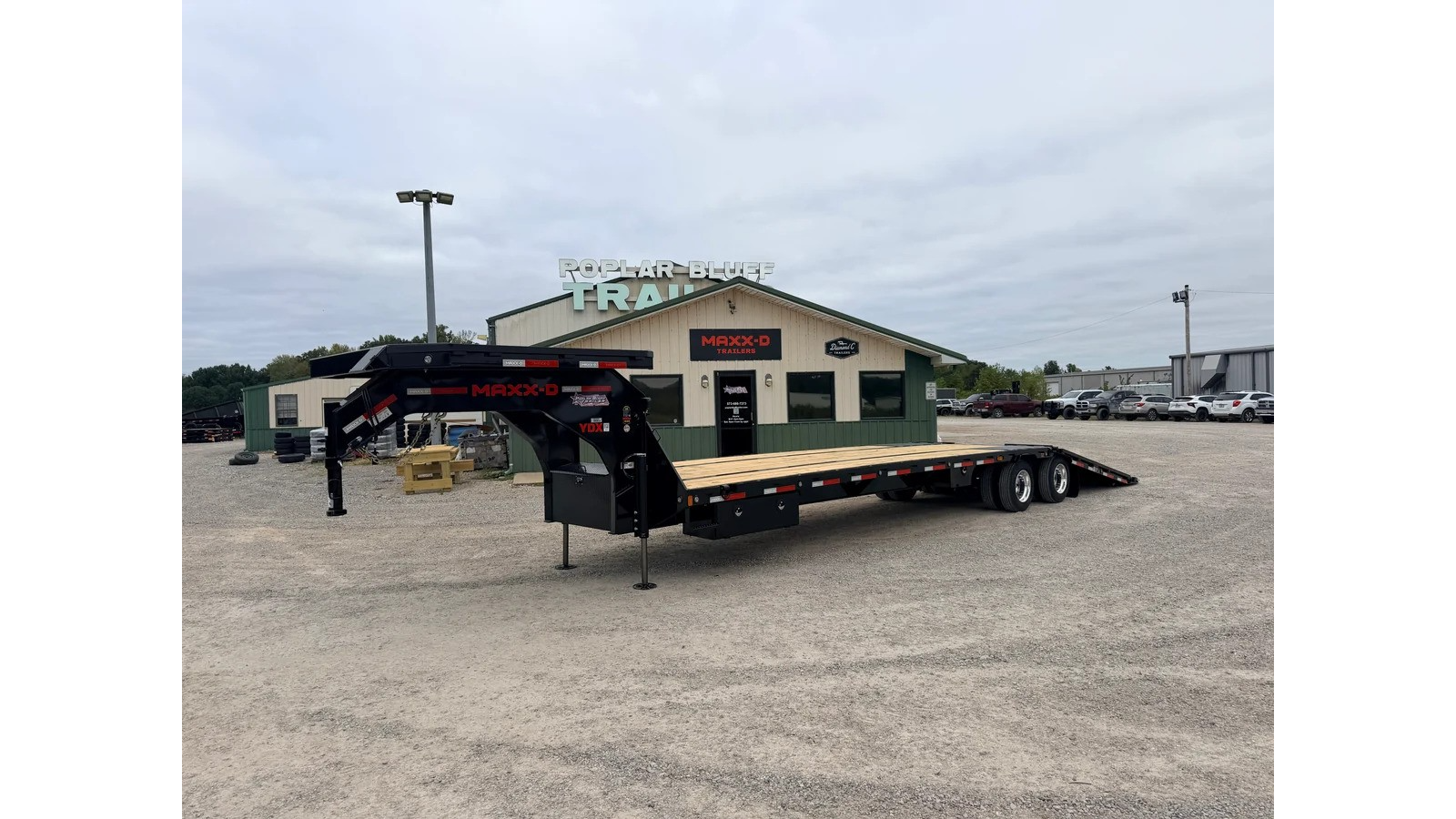
MAXX-D takes a different approach, offering hydraulic dovetail gooseneck trailers across a range of GVWR capacities to match different hauling needs. The lineup includes:
- The YDB10234, with a 34-foot deck and a GVWR built for heavy hauling.
- The YDX10232, with a 32-foot deck and a comparable GVWR rating.
- The YHB10240, with a 40,000 lbs GVWR and a 40-foot deck.
That top-end YHB10240 model is built with full-size excavators and dozers in mind, giving operators the capacity to move machines that would overwhelm a lighter trailer.
Load Trail’s Build Quality Trade-Offs
Load Trail hydraulic dovetails are often recognized for their powder-coated finish, strong welds, and torque tube construction underneath the deck, and many users recommend choosing hydraulic brakes over electric ones for heavy hauling. Some equipment haulers have reported issues with Load Trail’s dovetail design and quality control over time, with a portion of buyers preferring Diamond C’s build and hydraulic dovetail engineering despite the added cost.
Weighing these trade-offs comes down to balancing budget against how much daily abuse the trailer will see.
Matching the Trailer to the Job
Picking a brand is only part of the decision. The right hydraulic dovetail trailer also depends on how often it will be used and how the load gets secured once it is on the deck.
When Repeated Loading Justifies the Investment
Hydraulic dovetails make the strongest financial sense for operations with repeated loading, equipment with low ground clearance, or a single operator who loads machinery at changing job sites throughout the week. A contractor who loads once a month might not need the added capability, but one who loads daily will likely recover the investment through saved time and reduced wear on both equipment and operators.
Weight Distribution and Tie-Down Basics
Even the best hydraulic dovetail trailer depends on proper loading habits to perform safely. A few fundamentals apply across every brand and model:
- Distribute weight with roughly 60 percent of the load toward the front of the trailer and 40 percent toward the rear to prevent swaying during transit.
- Secure the load with appropriate tie-downs, such as straps, chains, or ropes rated for the equipment’s weight.
- Inspect the trailer before loading, checking tire inflation, light function, and hitch security.
- Load and unload on level ground whenever possible to keep the hydraulic system working as intended.
Safer, Faster Loading Is the Clear Winner
Hydraulic dovetail trailers solve a problem that has followed heavy equipment haulers for years: how to load safely without slowing down the job. Lower loading angles protect low-clearance machines, automatic load balancing and stronger braking protect drivers on the road, and faster turnarounds protect the bottom line. Diamond C, MAXX-D, and Load Trail each bring something different to the table, whether that is a shallow loading angle, a high-capacity GVWR lineup, or a rugged build at a lower price point.
For contractors ready to compare options side by side, Poplar Bluff Trailer has more resources on hydraulic dovetail trailers built for heavy equipment hauling – they might be worth a closer look before the next busy season gets underway.
Poplar Bluff Trailer
135 Hwy T Suite B
Poplar Bluff
Missouri
63901
United States


